Here is the question that actually matters when comparing the iPhone 17 vs Samsung Galaxy S26.
Not which one has the higher megapixel count. Not which one benchmarks faster on a test you will never replicate in real life. The question that matters is: which phone is the right choice for how you actually use a smartphone every day — and is the price difference worth it?
Both phones are compact 6.3-inch flagships released within six months of each other. Both are IP68 rated. Both have 120Hz displays. Both run the latest software from their respective ecosystems. On paper, they are closer than they have ever been. In practice, the differences are real — and they matter for specific types of buyers in ways that a spec sheet will not tell you.
The iPhone 17 launched in September 2025 at $799 for the base 8GB/256GB model. The Samsung Galaxy S26 launched in March 2026 at $899 for the base 12GB/256GB model. That $100 price difference is the starting point — but it is not the most important consideration. Here is the honest comparison.
iPhone 17 vs Samsung Galaxy S26 — Where They Actually Differ
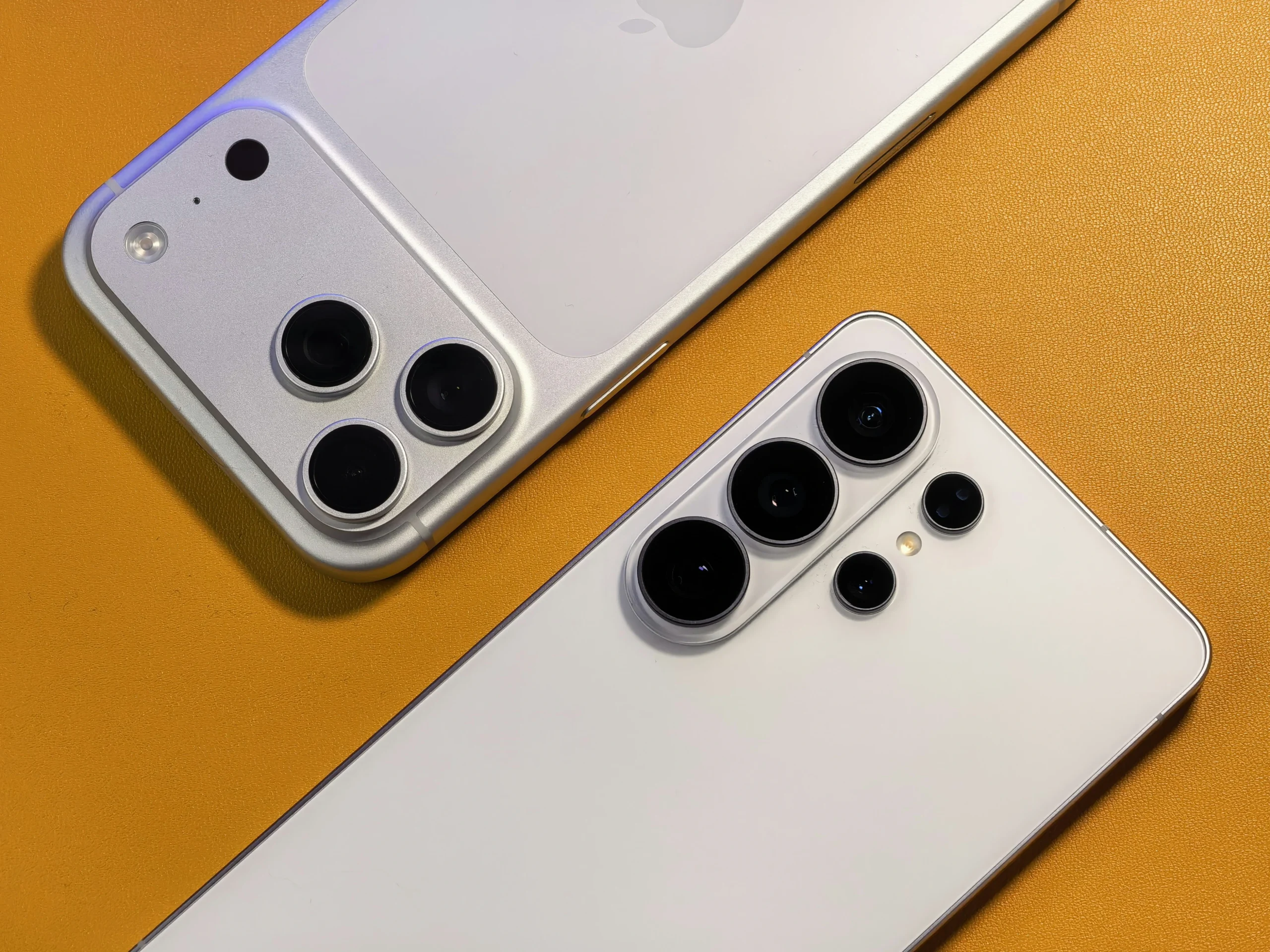
Both phones look similar from a distance. Compact form factor, flat backs, vertically-aligned rear cameras in the top-left corner, pill-shaped or centered cutout displays. The differences that matter are not visible on a spec sheet — they are in the day-to-day experience of using each phone.
The iPhone 17 is slightly heavier at 177 grams versus the Galaxy S26’s 167 grams. The S26 is thinner at 7.2mm compared to the iPhone 17’s 7.95mm. Neither difference is dramatic, but the Galaxy S26 feels noticeably lighter and slimmer in the hand — which matters for users who carry their phone in a pocket all day.
The iPhone 17 uses Ceramic Shield 2 glass on the back. The Galaxy S26 uses Corning Gorilla Glass Victus 2. Both are highly durable — but Apple’s Ceramic Shield has a strong track record for surviving drops that crack most competitors. For users who regularly drop their phones, this is a real differentiator.
Both phones have an ultrasonic in-display fingerprint sensor on the Galaxy S26 and 3D Face ID on the iPhone 17. Face ID remains the faster and more reliable biometric unlock in bright and dim lighting — the Galaxy S26’s in-display fingerprint occasionally struggles through wet fingers and screen protectors.
Display — Samsung Wins on Vibrancy, Apple Wins on Accuracy
Both phones use OLED technology with 120Hz refresh rates and 3000 nits peak brightness — and both are genuinely excellent displays by any standard. The difference is in calibration philosophy.
The Galaxy S26 features a Dynamic AMOLED 2X panel with a resolution of 2340×1080 pixels — 409 PPI. The iPhone 17 uses Apple’s Super Retina XDR OLED with a resolution of 2622×1206 pixels — 458 PPI. The iPhone 17’s display is sharper. Text looks crisper at the same viewing distance, and fine detail in photos and videos renders more precisely.
The Galaxy S26 prioritises colour vibrancy. Its Dynamic AMOLED panel delivers more saturated, punchy colours that look dramatic for streaming, gaming, and social media. The iPhone 17 prioritises colour accuracy — with Dolby Vision support and Apple’s colour science tuning, what you see is closer to how content was intended to look.
The honest verdict: if you watch a lot of video content and want your screen to look impressive, the Galaxy S26 wins. If you do photography, design work, or simply prefer accurate colours over vivid ones, the iPhone 17’s display is the better choice. Both panels are exceptional — this is a preference call, not a clear winner.
Performance — Two Different Approaches to the Same Result
The Galaxy S26 scores higher on Geekbench Multi-Core benchmarks — 11,249 versus the iPhone 17’s 9,327. The Galaxy S26 runs on the Snapdragon 8 Elite Gen 5 or Exynos 2600 depending on region, paired with 12GB of RAM. The iPhone 17 runs on Apple’s A18 chip with 8GB of RAM.
Here is what the benchmark does not tell you: iPhone performance in real-world use is not slower than the Galaxy S26. Apple’s chip architecture and iOS optimisation mean that 8GB of RAM on an iPhone performs comparably to 12GB on Android in daily tasks. The benchmark gap does not translate to a meaningful experience gap for most users.
Where the Galaxy S26’s raw performance advantage shows up is in heavy multitasking, gaming at maximum settings, and running multiple demanding apps simultaneously. For users who push their phones hard — mobile gaming, video editing, running multiple AI apps — the Galaxy S26’s extra RAM and benchmark headroom is a real advantage.
For everyone else — the majority of smartphone users — both phones handle everything they need without hesitation.
Camera — Three Lenses vs Two
This is the most significant hardware difference between the two phones — and the one that most directly affects buying decisions for photography-focused users.
The Galaxy S26 has three rear cameras: a 50MP main, a 12MP ultrawide, and a 10MP telephoto with 3x optical zoom. The iPhone 17 has two rear cameras: a 48MP main and a 48MP ultrawide. The iPhone 17 has no dedicated telephoto lens.
For buyers who regularly zoom into subjects — photographing wildlife, sports, events, distant landscapes, or anything where getting physically closer is not possible — the Galaxy S26’s 3x optical telephoto is a meaningful advantage that the iPhone 17 cannot match without digital zoom degradation.
For everything else, the camera comparison is closer. Apple’s computational photography — the processing that happens after the shutter fires — produces images with natural colour science and strong detail preservation in most conditions. Samsung’s processing delivers punchier, more saturated images that tend to look more impressive on a phone screen but can appear over-processed on larger displays.
The front camera tells a different story. The iPhone 17’s 18MP front camera outperforms the Galaxy S26’s 12MP selfie camera in resolution, detail, and low-light performance. For video callers, content creators shooting selfie-style content, and anyone for whom the front camera is a primary use case, the iPhone 17 is the stronger choice.
Battery and Charging — Galaxy S26 Has the Advantage
The Galaxy S26 has a 4,300 mAh battery. The iPhone 17 has a 3,692 mAh battery. In real-world testing, the Galaxy S26 delivers approximately 11 hours 22 minutes of screen-on time — a significant figure for a compact flagship. The iPhone 17’s battery life data is less documented publicly, but Apple’s efficiency typically offsets the smaller battery capacity to a degree.
Charging is where the Galaxy S26 has a clear advantage. It supports wired, wireless, and reverse wireless charging — giving it more versatility for users who use multiple charging methods. The iPhone 17 supports MagSafe and Qi2 wireless charging and wired charging, but lacks reverse wireless charging.
For heavy users — people who use their phone as a primary work device, stream video throughout the day, or regularly end days with less than 20% battery — the Galaxy S26’s larger battery and versatile charging are meaningful practical advantages.
Software and Ecosystem — The Most Important Factor Most Comparisons Skip
Here is the consideration that outweighs every spec on this list for most buyers — and the one that comparison guides consistently underweight.
If you already own a MacBook, iPad, AirPods, or Apple Watch, the iPhone 17 integrates with your existing setup in ways that no Android phone can replicate. AirDrop, Handoff, Universal Clipboard, iPhone Mirroring on Mac, and the seamless continuity features across Apple devices are genuinely valuable for users already in the Apple ecosystem. Leaving that ecosystem has a real cost.
If you use Google services primarily — Gmail, Google Drive, Google Photos, Google Maps — the Galaxy S26 integrates more naturally. Samsung DeX for desktop use, Samsung Galaxy AI features including live translation and Circle to Search, and the more open Android file system give the Galaxy S26 advantages for power users who want control over their device.
The honest answer: if you are already in one ecosystem, stay there unless the other phone offers something you genuinely cannot live without. Switching ecosystems for a camera or a display preference is rarely worth the friction. If you are choosing for the first time, consider which services you use daily and choose the phone that integrates most naturally with them. If you want to understand how smartphones fit into broader earning strategies — whether for content creation, freelancing, or AI tools — our guide on how to earn money using your phone in 2026 covers every method available on both platforms. And if you are looking for a budget-friendly alternative before committing to either flagship, our guide on the best smartphones under 300 dollars in 2026 covers the strongest options available.
Price — Who Gets the Better Value?
The iPhone 17 starts at $799 for 8GB/256GB. The Galaxy S26 starts at $899 for 12GB/256GB. That is a $100 difference for a phone with more RAM, a telephoto camera, better battery life, and slightly lighter build.
On pure specifications per dollar, the Galaxy S26 offers more hardware for the price. The iPhone 17’s premium is partially justified by Apple’s software polish, chip efficiency, stronger front camera, and ecosystem value — but buyers outside the Apple ecosystem are paying a premium that the hardware alone does not justify.
The honest verdict on value: for buyers who do not already own Apple devices, the Galaxy S26 offers more hardware capability for less money. For buyers already in the Apple ecosystem, the iPhone 17‘s integration value makes the premium reasonable.
Who Should Buy the iPhone 17
Buy the iPhone 17 if you already use Apple devices and rely on the seamless integration between them. Buy it if you prioritise front camera quality for video calls and selfie content. Buy it if you prefer colour-accurate displays over vibrant ones. Buy it if you value Apple’s long software support record and the security model that comes with iOS. Buy it if you find Face ID faster and more convenient than an in-display fingerprint sensor.
Who Should Buy the Samsung Galaxy S26
Buy the Galaxy S26 if you regularly use a telephoto camera and need optical zoom. Buy it if battery life is a primary concern and you want the most endurance from a compact flagship. Buy it if you prefer a lighter, thinner phone. Buy it if you are primarily in the Google and Android ecosystem and want the most capable hardware for the price. Buy it if you want more RAM for heavy multitasking and demanding apps.
The Mistakes That Lead to the Wrong Choice
The first mistake is buying based on benchmark numbers. The performance gap between these phones in daily use is not noticeable for most tasks. Both handle everything a typical user does without hesitation.
The second mistake is switching ecosystems for a single feature. If you are deeply in the Apple ecosystem and considering switching to Samsung because of the telephoto lens, the friction of transferring apps, relearning workflows, and losing ecosystem integration will exceed the camera benefit for most people.
The third mistake is ignoring software longevity. Apple commits to the longest software support of any smartphone manufacturer — the iPhone 17 will receive iOS updates through at least 2031. Samsung has improved significantly on this metric, but Apple’s track record remains the industry benchmark.
The fourth mistake is buying the wrong phone for your actual use patterns. A buyer who never zooms in with their camera should not weight the Galaxy S26’s telephoto heavily. A buyer who never uses Apple devices should not pay the iPhone 17’s ecosystem premium.
The Verdict — iPhone 17 vs Samsung Galaxy S26
This comparison does not have a single winner — and any guide that declares one is oversimplifying a genuinely close decision.
The Galaxy S26 wins on hardware value per dollar, battery life, telephoto camera, RAM, and weight. The iPhone 17 wins on display sharpness, front camera quality, Face ID reliability, colour accuracy, and ecosystem integration. Both are equal on build quality, water resistance, and overall daily performance for typical users.
The tiebreaker, for most people, is the ecosystem they already live in. That is not a marketing statement — it is a practical reality. The seamless integration of Apple devices with each other, and the seamless integration of Android with Google’s services, means that the better phone for you is almost always the one that connects most naturally to everything else you already use.
What Comes Next
Both Apple and Samsung will release successor models in late 2026 and early 2027 — and both will be meaningfully more capable than their current flagships. If you are not in a rush, waiting three to four months for the next generation is always an option.
If you need a phone now: the choice between the iPhone 17 and Galaxy S26 comes down to ecosystem and use case, not hardware quality. Both are exceptional flagship smartphones. Both will serve most users well for three to four years. The right one is the one that fits how you actually use a phone — not the one with the higher spec sheet number.
One ecosystem. One use case. That is the decision framework.
Is the iPhone 17 or Samsung Galaxy S26 better in 2026?
Neither is objectively better — the right choice depends on your ecosystem and use case. The Galaxy S26 offers more hardware per dollar — more RAM, telephoto camera, better battery life, and lighter build at $899. The iPhone 17 offers sharper display, better front camera, Face ID, and seamless Apple ecosystem integration at $799.
Which has better battery life — iPhone 17 or Samsung Galaxy S26?
The Galaxy S26 has the advantage. Its 4,300 mAh battery delivers approximately 11 hours 22 minutes of screen-on time in testing. The iPhone 17 has a smaller 3,692 mAh battery — though Apple’s chip efficiency partially compensates.
Which phone gets longer software support — iPhone 17 or Galaxy S26?
Apple leads on software support — the iPhone 17 will receive iOS updates through at least 2031, giving it approximately 6 years of OS support. Samsung has improved significantly and now offers 4 years of OS updates and 5 years of security patches for the Galaxy S26.