
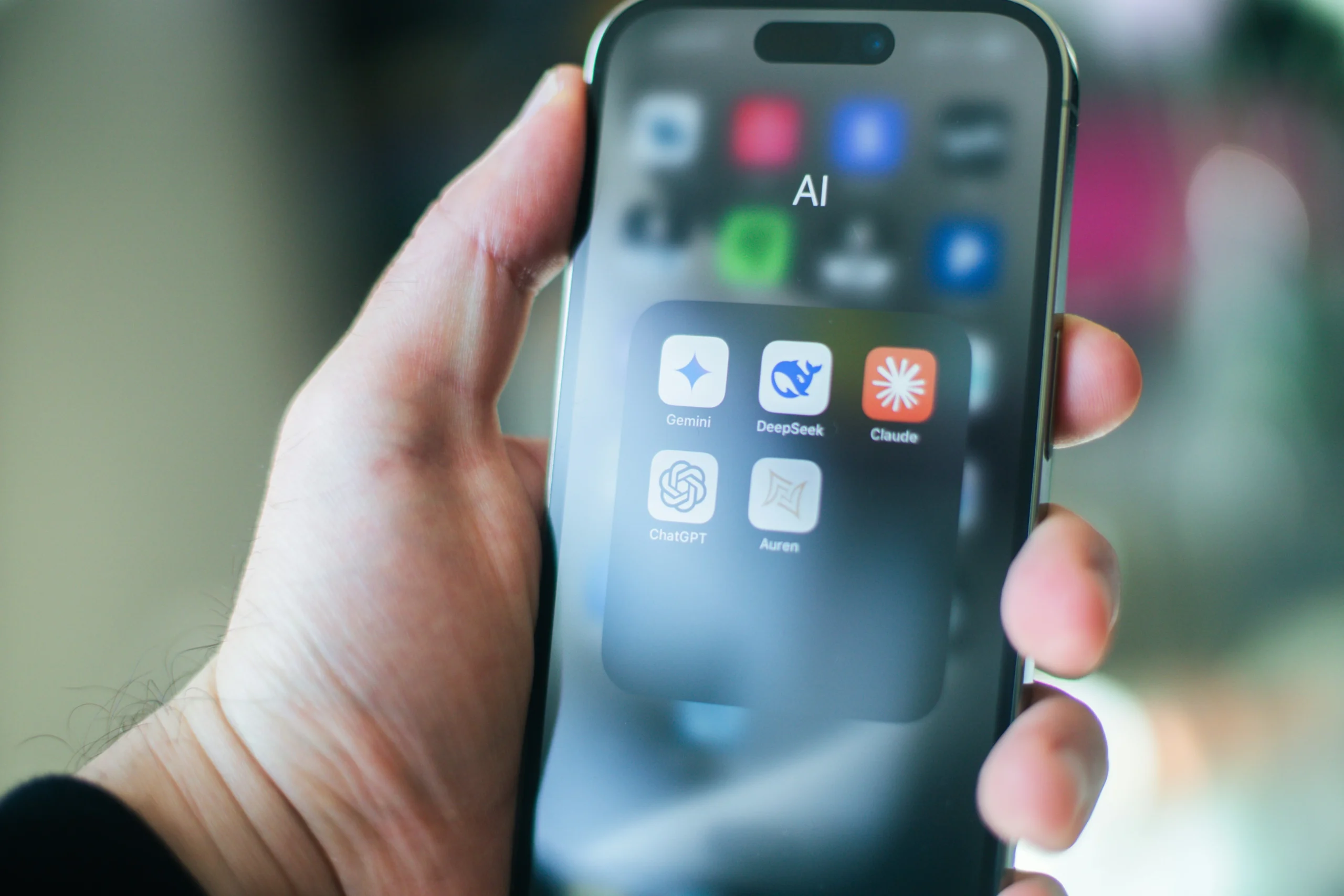
I ignored AI tools for almost eight months into my freelancing career — and I was wrong.
Not because I didn’t believe in the technology. I just thought it was a shortcut that would make my work generic. So I kept doing everything manually: writing proposals from scratch, responding to every email by hand, building every deliverable with zero assistance.
Then I watched a freelancer with half my experience close 3 clients in one week — while I was still drafting my second proposal. His edge wasn’t talent. It was his AI tools for freelancers stack.
I’ve tested dozens of tools since then. Here’s the honest breakdown of what actually works in 2026 — and what’s just noise.
Why the Best AI Tools for Freelancers Matter More Than Ever in 2026
Here’s the bigger picture most people miss: this isn’t really about productivity tools. It’s about a structural shift happening in the labor market.
According to PwC’s 2026 AI Jobs Barometer, workers with AI skills now command a 56% wage premium — up from just 25% the year before. That number didn’t double by accident. It reflects a simple economic reality: a freelancer using the right AI tools for freelancers can produce what used to require a small team.
Gartner reported that 82% of freelance platforms in 2026 now incorporate AI-powered features. Upwork, Fiverr, and Toptal are using AI to match clients with freelancers in under 3.2 days — down from 14 days just two years ago. The platform infrastructure has already adapted. The question is whether you have.
The freelancers winning in 2026 aren’t the most talented — they’re the ones who’ve turned AI into a silent business partner that handles everything except the actual thinking.
And here’s the part that stings: 77% of freelancers are now using AI tools regularly, according to industry data. If you’re in the 23% who aren’t — you’re not competing on a level field anymore.
The Shift Nobody Talks About
The old AI tools for freelancers — the 2023 and 2024 vintage — were basically glorified autocomplete. You’d paste in some text, get a mediocre draft back, and spend 40 minutes fixing what the AI got wrong. The time math rarely worked out.
What changed in 2025 and 2026 is what experts are calling “contextual intelligence.” The best AI tools for freelancers today understand your situation — your client’s tone, your writing voice, your deadline pressure — not just the words you type. That’s a fundamentally different category of tool.
The Complete Timeline — How AI Tools for Freelancers Evolved
2022–2023 — ChatGPT launches and freelancers experiment. Most use it for basic drafts. Quality is inconsistent. Clients start noticing generic AI-written content and push back.
2024 — Niche AI tools for freelancers emerge. Jasper for content marketers. Descript for video editors. GitHub Copilot for developers. The “one tool for everything” era ends.
Early 2025 — The stack model takes over. Successful freelancers stop looking for a single AI solution and start building 2–3 tool combinations matched to their specific workflow.
Mid-2025 — AI adoption among freelancers hits 77%. Platforms like Upwork integrate their own AI — Upwork’s Uma AI assistant launches specifically for freelancer-client matching and proposal drafting.
2026 — The market matures. AI tools for freelancers are no longer optional infrastructure — they’re the entry requirement for competing at a professional level. Freelancers without an AI stack are operating at a measurable financial disadvantage.
Exact Breakdown — The Best AI Tools for Freelancers by Category
The Core Stack Every Freelancer Needs in 2026
These aren’t ranked by hype. They’re ranked by actual time saved per week — which is the only metric that matters for a solo operator.
ChatGPT Plus — $20/month Still the best all-rounder for most freelancers. Writing, coding, research, client communication templates — it handles all of it in one interface. The key is using it for structure and first drafts, not final output. Freelancers report cutting post production time on 1,000-word blog posts from 3 hours down to 90 minutes when using ChatGPT Plus consistently.
Claude Pro — $20/month Better than ChatGPT for long documents, deep editing, and tasks requiring nuanced reasoning. If you work on research reports, strategy documents, or anything requiring sustained context over thousands of words — Claude Pro outperforms. It’s the tool most content strategists and consultants quietly switched to in 2025.
Perplexity Pro — $20/month The best research tool in the current AI stack for freelancers. Unlike ChatGPT, it provides cited, real-time sources — which means you can use its outputs in client deliverables without fact-checking every line from scratch. For freelancers in journalism, consulting, or content marketing, this is a non-negotiable.
Grammarly Pro — $12/month billed annually Handles proofreading better than any general AI assistant. It doesn’t just catch grammar — it flags tone mismatches, passive voice patterns, and readability issues specific to your industry. The ROI is immediate: one avoided client revision request pays for 3 months of the subscription.
Canva Magic Studio — included in free Canva plan For freelancers who aren’t designers but need to produce visual deliverables — client presentations, social media content, brand mockups — Canva’s AI features inside Magic Studio eliminate the need to outsource basic design work. Text-to-graphic, template color matching, and AI layout suggestions are all included at zero extra cost.
The Specialist Tools Worth Knowing
Notion AI — best for project organization across multiple client accounts. Tracks tasks, auto-generates meeting summaries, and builds structured knowledge bases from messy notes.
Descript — the standard for freelance video and podcast editors. AI-powered transcription, auto-cut silences, text-based video editing. What used to take 4 hours of manual editing now takes under 45 minutes.
HoneyBook AI — for service-based freelancers managing contracts and invoices. Generates proposals, sends them, follows up automatically, and learns from which versions actually close deals. The 2026 version is a significant upgrade from the 2023 platform.
Motion — AI-powered calendar that rebuilds your schedule automatically when a client call runs long or a deadline shifts. For freelancers managing 4+ concurrent projects, it eliminates the “manual reschedule” spiral that eats hours every week.
| AI Tool | Best For | Price | Main Strength | Ideal Freelancer |
|---|---|---|---|---|
| ChatGPT Plus | Writing, coding, research & client communication | $20/month | All-round productivity | Most freelancers |
| Claude Pro | Long documents, editing & reasoning | $20/month | Deep context and nuanced work | Writers, consultants & strategists |
| Perplexity Pro | Research and fact-finding | $20/month | Real-time cited sources | Researchers, journalists & content marketers |
| Grammarly Pro | Proofreading and writing improvement | $12/month billed annually | Grammar, tone & readability | Writers and content creators |
| Canva Magic Studio | Presentations, social content & basic design | Included in free Canva plan | AI-assisted visual creation | Freelancers without design expertise |
“But Won’t AI Make My Work Generic?” — The Obvious Objection Answered
This is the concern I had — and it’s the most common pushback I hear from freelancers who haven’t adopted AI tools for freelancers yet. It deserves a direct answer.
The concern is legitimate. Early AI tools did produce generic output. And yes, clients pushed back on obviously AI-generated work in 2023 and 2024.
But here’s what’s different now: the best AI tools for freelancers in 2026 are not writing tools. They’re thinking support tools.
You use ChatGPT to build a structure, not a final draft. You use Perplexity to gather evidence, not conclusions. You use Grammarly to catch what your eyes miss, not to replace your voice. The freelancer still makes every creative and strategic decision — AI just handles the scaffolding.
The Core Insight: AI Doesn’t Replace Freelancers — It Exposes Which Freelancers Were Only Selling Time
The freelancers who are genuinely at risk in 2026 are those whose entire value proposition was speed or volume — not expertise or judgment. If a client was paying you to write 10 blog posts a month because you were fast, AI can now compete with that. But if a client is paying you for your strategic thinking, your industry knowledge, or your creative instincts — AI makes you more valuable, not less. Because now you can deliver those things faster and at higher volume.
If you want to understand how to use these tools to generate direct income, our guide on how to make money with AI tools in 2026 covers every method in detail.
Industry Comparison — AI Tools for Freelancers vs. AI Tools for Agencies
Here’s a comparison most articles skip: the difference between tools designed for solo freelancers versus tools designed for agencies with teams.
Agency-focused tools like Jasper, HubSpot’s AI suite, and enterprise versions of Asana Intelligence are built for collaboration — shared workflows, approval chains, multi-user editing. For a solo freelancer, most of that infrastructure is overhead, not value.
The best AI tools for freelancers in 2026 are deliberately lightweight. They’re designed for a single operator who needs to move fast without managing software complexity. ChatGPT Plus, Claude Pro, and Perplexity Pro each deliver their full value from a single browser tab — no onboarding, no team setup, no admin overhead.
Who Is Better Positioned: The Generalist or the Specialist?
Generalist freelancers using a broad AI stack — ChatGPT for writing, Canva for design, Descript for video — can now offer multi-service packages that compete with small agencies. A single person can realistically manage what used to require 3 contractors.
But specialist freelancers using AI in their niche — a developer using GitHub Copilot, a video editor using Descript, a consultant using Claude Pro — are seeing the highest rate of income growth. The 56% wage premium for AI skills is concentrated in specialists, not generalists.
The winning move in 2026 is to pick a specialist track and use AI to expand your service scope within it. Not to become a generalist — but to look like one to your clients.
What You Should Actually Do Now — Honest Advice
Here’s what I would tell a friend getting started with AI tools for freelancers right now:
If you’re brand new to freelancing: Start with ChatGPT Plus at $20/month. Use it every single day for 30 days — proposals, email templates, research, brainstorming. Measure your time savings before adding any other tool. One well-integrated tool beats five tools you barely use.
For students specifically, our guide on the best AI tools for students in 2026 shows how the same tools apply to academic work.
If you’re an established freelancer hitting a time ceiling: Add Perplexity Pro and either Notion AI or Motion, depending on whether your bottleneck is research or scheduling. These two additions typically free up 8–12 hours per week for established freelancers managing multiple clients.
If you’re a content creator or writer specifically: Your stack is Claude Pro plus Grammarly Pro. Claude for the thinking and structure, Grammarly for the polish. This combination consistently outperforms single-tool approaches for long-form work.
If you’re undecided and worried about the cost: Every tool mentioned above has a free tier that covers basic use. Start with free versions of ChatGPT, Claude, and Perplexity simultaneously for two weeks. See which one you naturally reach for most — then pay for that one first.
If you want to understand how ChatGPT specifically fits into a freelancing income strategy, our guide on how to use ChatGPT to make money in 2026 is worth reading.
What Comes Next — AI Tools for Freelancers Are Still Early
The AI tools for freelancers landscape will look dramatically different 12–18 months from now — and the direction is clear.
Tool consolidation is coming. Right now, freelancers are managing 3–5 separate subscriptions across different platforms. By late 2027, expect 1–2 super-apps to absorb most of these functions. Notion AI is already moving this direction. ChatGPT’s expanding plugin ecosystem is another signal.
Personalization will deepen significantly. The next generation of AI tools for freelancers will maintain memory of your clients, your pricing history, your writing style, and your past work — across sessions and projects. The “contextual intelligence” shift of 2025 was just the beginning.
Platform integration will become seamless. Upwork’s Uma assistant already has access to your proposal history and client interactions. In 18 months, expect AI that can proactively identify which jobs in your feed match your highest-converting past proposals — and draft the application before you’ve even read the listing.
The freelancers who build AI fluency now — before the tools get easier — will have a compounding advantage. Just as learning SEO early meant years of organic traffic before everyone else caught up, mastering AI tools for freelancers in 2026 is the same bet.
If you’re thinking about this in the context of a longer career strategy, the analysis of how the 2025 labor market is changing shows exactly where the structural shifts are heading — and why AI fluency is the single most defensible skill a freelancer can build right now.
What are the best AI tools for freelancers in 2026?
The best AI tools for freelancers depend on the type of work you do. ChatGPT Plus is the strongest all-rounder, while Claude Pro is better suited to long documents and nuanced reasoning. Perplexity Pro is particularly useful for research, Grammarly Pro for proofreading, and Canva Magic Studio for visual content.
Do freelancers need multiple AI tools?
Not necessarily. The article recommends starting with one well-integrated tool rather than subscribing to several tools that you barely use. New freelancers can start with ChatGPT Plus and measure their time savings before adding other tools. More established freelancers can add tools such as Perplexity Pro, Notion AI, or Motion depending on their specific bottleneck.
Which AI tool is best for freelance writers?
Claude Pro and Grammarly Pro make a strong combination for freelance writers. Claude Pro can handle the thinking, structure, and long-form work, while Grammarly Pro focuses on proofreading, tone, and readability. The article recommends this combination for content creators and writers specifically.
Can AI tools replace freelancers?
AI tools are unlikely to replace freelancers whose value comes from expertise, strategic thinking, industry knowledge, and creative judgment. However, freelancers whose main advantage is simply speed or volume face greater pressure from AI. The article’s central argument is that AI works best as a support system that handles scaffolding while the freelancer remains responsible for creative and strategic decisions.