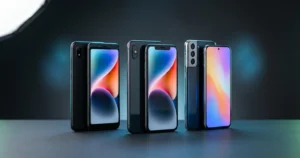

Here is something the smartphone industry does not want you to believe.
The best smartphone does not cost $1,000. That statement was controversial five years ago. In 2026, it is just true. The gap between a flagship phone and a $250 phone has narrowed so dramatically that for most people — browsing, streaming, messaging, photography, navigation — the $250 phone handles everything they actually do without a meaningful difference in daily experience.
The $200 to $300 sweet spot in particular has become the most competitive price bracket in smartphones. Chipmakers now produce mid-range processors that handle everyday tasks as smoothly as chips that cost three times as much two years ago. Cameras in this range take photos that most people genuinely cannot distinguish from those taken on a $1,200 device in good lighting. Battery life often exceeds flagship phones because the chips are less power-hungry.
I have done the research on what is actually worth buying under $300 in 2026. Here are the best smartphones under $300 — honestly reviewed, with real use cases and no brand sponsorships.
What to Look For in the Best Smartphones Under $300
Before the picks, here is the buying framework that separates a purchase you will be happy with in two years from one you will regret in six months.
The single most important factor in a budget smartphone in 2026 is software update commitment. A phone with three years of security updates is obsolete faster than you think — security vulnerabilities go unpatched, apps stop supporting older Android versions, and performance degrades as the software is not optimised for newer Android features. Look for phones that commit to at least four years of OS updates and five years of security patches. Samsung and Google are the clear leaders on this metric at the budget price point.
The second factor most buyers underweight is display quality. You look at your phone screen hundreds of times per day. The difference between a 60Hz LCD display and a 120Hz AMOLED display is immediately noticeable — smoother scrolling, richer colours, better outdoor visibility, and significantly better video quality. In 2026, AMOLED displays are available under $300 from multiple manufacturers. There is rarely a good reason to settle for LCD at this price.
The third factor is processor longevity. A phone that feels fast today but uses a two-year-old chip will slow down noticeably faster as apps become more demanding. Look for Qualcomm Snapdragon 6 series or newer, Samsung Exynos 1 series, or Google Tensor G3 or newer in the sub-$300 range.
Pick 1 — Google Pixel 8a (Best Overall Under $300)
The Google Pixel 8a is the clearest recommendation for most buyers under $300 in 2026 — and it is not particularly close.
At $250 to $280 depending on retailer and timing, the Pixel 8a combines the best camera processing in its price class, seven years of guaranteed OS and security updates, Google’s Tensor G3 chip with on-device AI features, and clean stock Android without bloatware. Seven years of updates means a phone bought today stays secure and supported until 2031. No other smartphone under $300 comes close to that commitment.
The camera is the Pixel 8a’s clearest advantage. Google’s computational photography — the software processing that happens after the shutter fires — produces images that regularly outperform phones costing twice as much in real-world conditions. Night Sight, the low-light photography mode, is particularly strong. Portrait mode produces natural-looking depth separation without the artificial edge halos common in budget phone portrait shots.
The honest limitation: battery life is average by 2026 standards. The Pixel 8a will get through a full day of typical use, but heavy users will want to charge before the day ends. Charging speed is also slower than Chinese competitors at this price. If battery life is your primary concern, the Samsung Galaxy A55 or Motorola Moto G Power are stronger choices.
Best for: Anyone who wants the best camera, longest software support, and cleanest Android experience under $300. The default recommendation for most buyers.
Price range: $250 to $280
Pick 2 — Samsung Galaxy A55 5G (Best Display Under $300)
Samsung’s Galaxy A55 5G is the phone that demonstrates most clearly how much the budget smartphone market has improved in 2026.
The A55 features a 6.6-inch Super AMOLED display with a 120Hz refresh rate — the same display technology Samsung was putting in $700 phones three years ago. Colours are vivid, motion is smooth, and outdoor visibility is genuinely good. If display quality is your priority — for video streaming, gaming, or just daily use — the A55 delivers a screen that no other phone under $300 matches.
Samsung promises four years of Android OS updates and five years of security updates for the A55, which is the strongest software support commitment in this price range after Google. For buyers who keep phones for three to four years, that longevity matters significantly more than most spec comparisons.
The 5,000 mAh battery delivers reliable all-day performance, and the 50MP rear camera produces strong results in good lighting. Indoor and low-light photography trails the Pixel 8a noticeably — Samsung’s image processing at this price point is competent rather than impressive.
Best for: Buyers who prioritise display quality, long software support, and the Samsung ecosystem. The A55 is also the strongest choice for users who want a large, bright screen for media consumption.
Price range: $250 to $300
Pick 3 — Motorola Moto G Power 5G (Best Battery Life Under $300)
If you need a phone that gets through a full day without anxiety about finding a charger, the Motorola Moto G Power 5G is the strongest option under $300 in 2026.
The Moto G Power’s battery performance is genuinely exceptional for its price. Combined with a power-efficient Snapdragon processor, the phone regularly delivers two full days of typical use on a single charge. For users who travel frequently, work in environments without easy charging access, or simply forget to charge regularly, this battery performance is a meaningful differentiator.
The G Power also includes features rarely seen at this price point: wireless charging, NFC for contactless payments, and a distinctive vegan leather back that gives it a premium feel uncommon in budget phones. The 120Hz display handles scrolling and video smoothly.
The honest limitation is software support. Motorola commits to only two years of OS updates and three years of security patches for this model — significantly less than Samsung or Google. If you plan to keep this phone for more than two years, the shorter update window is a real consideration.
Best for: Users who prioritise battery life above everything else, frequent travellers, and anyone who needs a reliable phone that lasts two full days without charging.
Price range: $230 to $270
Pick 4 — Samsung Galaxy A26 5G (Best Value Under $250)
For buyers whose budget sits closer to $200 than $300, the Samsung Galaxy A26 5G delivers the best combination of features and software longevity available at this price in 2026.
At $200 for the 128GB version, the Galaxy A26 includes a 5,000 mAh battery, a 50MP rear camera, Android 16 out of the box, and Samsung’s commitment to four years of OS updates and five years of security patches. That software support commitment at a $200 price point is remarkable — and it is the primary reason the A26 earns a place on this list over competitors with marginally better specs but worse update policies.
The display is a 6.7-inch Super AMOLED panel with a 120Hz refresh rate — the same screen technology as more expensive Samsung models. For the price, the visual quality is exceptional.
The honest limitation: the processor is a step below the A55, and multitasking performance reflects that. Heavy users running multiple demanding apps simultaneously will notice the difference. For everyday tasks — social media, streaming, messaging, navigation — the A26 handles everything smoothly.
Best for: Budget-conscious buyers who want Samsung’s software support commitment and AMOLED display quality at the lowest possible price.
Price range: $200 to $230
Pick 5 — OnePlus Nord N30 5G (Best for Fast Charging Under $300)
The OnePlus Nord N30 5G makes one argument more convincingly than any other phone under $300: charging speed.
At $230 to $260, the Nord N30 includes 50-watt SuperVOOC fast charging — which takes the 5,000 mAh battery from zero to 100% in under 60 minutes. Most phones in this price range charge at 15 to 25 watts, which means 90 to 120 minutes for a full charge. For users who regularly find themselves with a dead phone and limited time, the charging speed difference is genuinely impactful.
The 6.72-inch Full HD display with 120Hz refresh rate handles video and gaming well. The Snapdragon 695 processor delivers smooth everyday performance. Storage is generous at 128GB with microSD expansion available — increasingly rare in budget phones.
The honest limitation is software support — OnePlus commits to two years of OS updates for the Nord N30, which is the weakest update policy on this list. Camera performance in low light also trails the Pixel 8a and Galaxy A55 noticeably.
Best for: Users who frequently need fast charging, heavy media consumers who want generous storage, and buyers who prioritise performance value over long-term software support.
Price range: $230 to $260
Pick 6 — Xiaomi Redmi Note 13 Pro (Best Camera Under $250)
For buyers who prioritise camera quality above everything else and are working with a tighter budget, the Xiaomi Redmi Note 13 Pro delivers camera hardware that punches significantly above its price.
The 200MP primary camera sensor is the headline specification — and while megapixel count alone does not determine camera quality, the sensor size and detail capture in good lighting conditions genuinely impresses at this price. The 6.67-inch AMOLED display with 120Hz refresh rate and 1800 nits peak brightness is among the brightest in the sub-$250 category.
The honest caveat for Western markets: Xiaomi’s software update commitment and after-sales support are less consistent than Samsung or Google. MIUI — Xiaomi’s Android skin — includes more bloatware and advertising integrations than stock Android or Samsung’s One UI. For buyers in markets with strong Xiaomi support, it is an exceptional value. For others, the software experience is a real trade-off.
Best for: Camera-focused buyers on a tight budget, users in markets with strong Xiaomi support, and anyone who wants flagship-level camera hardware at a budget price.
Price range: $200 to $250
What to Avoid When Buying a Smartphone Under $300
The patterns that lead to buyer’s remorse in the budget smartphone market are consistent enough to spell out clearly.
Avoid phones with less than three years of guaranteed security updates — ideally four or more. A phone that stops receiving security patches becomes a liability, not an asset. The manufacturers with the strongest update commitments at this price point are Google and Samsung. Prioritise their models if longevity matters to you.
Avoid phones with less than 6GB of RAM for primary use. Four gigabytes of RAM handled Android smoothly three years ago. In 2026, with modern Android and current app requirements, 4GB creates noticeable slowdowns during multitasking. The minimum for a comfortable Android experience in 2026 is 6GB — 8GB for users who multitask heavily.
Avoid LCD displays when AMOLED is available at the same price. The difference in daily experience — colour quality, contrast, outdoor visibility, battery efficiency — is immediately noticeable. In 2026, AMOLED is available from Samsung, Google, OnePlus, and Xiaomi at under $250. There is rarely a good reason to choose LCD.
The Fastest Path to Choosing the Right Smartphone Under $300
If you want the best all-around phone and long software support: the Google Pixel 8a at $250 to $280 is the clearest recommendation. Best camera, seven years of updates, clean Android, and strong AI features. This is the right choice for most buyers.
If you want the best display and Samsung’s ecosystem: the Galaxy A55 5G at $250 to $300 delivers the strongest screen in this price range with four-year OS update support.
If battery life is your primary concern: the Motorola Moto G Power 5G at $230 to $270 delivers two-day battery performance with wireless charging at a budget price. If you want to understand how your smartphone fits into a broader strategy for earning money online — through content creation, freelancing, or AI tools — our guide on how to earn money using your phone in 2026 covers every method available. And if you are looking to pair your smartphone with a reliable budget laptop for a complete mobile work setup, our guide on the best budget laptops under 500 dollars in 2026 covers the strongest options available right now.
What Comes Next for Budget Smartphones
The sub-$300 smartphone market will be stronger in twelve months than it is today. Component costs continue falling, software update commitments are improving industry-wide under regulatory pressure, and competition between Samsung, Google, Motorola, and Chinese manufacturers is driving feature improvements at every price point.
The phones on this list represent the best available under $300 in 2026 — and they are meaningfully better than what was available at this price twelve months ago. Buy based on your primary use case, prioritise software update longevity, and choose a display technology you will enjoy looking at every day.
The best smartphone is the one that does everything you actually need reliably for the next three years. Every option on this list can do exactly that.