

This is the complete, honest, step-by-step guide on how to start a blog and turn it into real income.
I started my first blog with zero readers, zero traffic, and a $34 hosting plan I could barely afford.
Twelve months later, that same blog was generating consistent monthly income — not life-changing money at first, but real, recurring money that arrived every month without me trading hours for it.
Here’s the truth nobody tells you upfront: learning how to start a blog and make money in 2026 is not complicated. But it does require doing the right things in the right order — and most beginner guides skip the parts that actually matter.
I’ve done the research so you don’t have to. This is the complete, honest, step-by-step guide — from picking your niche to your first dollar.
Why Learning How to Start a Blog and Make Money in 2026 Is Still One of the Best Decisions You Can Make
The first step when you how to start a blog journey begins is niche selection.
Here’s the angle most people miss completely: blogging in 2026 isn’t what it was in 2015.
In 2015, you could publish average content on any topic and rank on Google within weeks. Traffic was easy. Money followed automatically. Those days are gone — and that’s actually good news for you.
Here’s why: the bloggers who understood the shift — from “publish lots of content” to “build a real content brand” — are now earning more than ever. According to research from RyRob.com, successful bloggers in 2026 are treating their blogs like businesses from day one — choosing niches with proven monetization potential, building email lists from their first post, and using AI tools to produce content faster than any solo blogger could in 2020.
The opportunity to start a blog and make money in 2026 hasn’t disappeared — it’s just moved upstream. The bar is higher, but so is the reward for clearing it.
And here’s the number that matters: it costs between $34.50 and $65.40 to start a blog for your entire first year — domain plus hosting. That’s less than a single dinner out. The barrier to entry has never been lower. The barrier to success has never been more clearly defined.
The Hidden Shift Nobody Talks About
AI changed blogging in 2025 — but not in the way most people feared. Bloggers who use AI tools to research faster, outline smarter, and edit more efficiently are now producing 3x the content of non-AI bloggers at the same quality level. The bloggers who are struggling in 2026 are the ones who either ignored AI entirely or let AI replace their voice completely. The sweet spot — your ideas, your expertise, AI-assisted execution — is where the money is.
The Complete Timeline — How Blogging as an Income Source Evolved
2010–2015 — The golden era of “publish and rank.” Low competition, easy Google traffic, basic monetization through display ads. Anyone with a keyboard could start a blog and make money within months.
2016–2019 — Google algorithm updates (Panda, Penguin, Medic) start rewarding expertise and authority. Thin content sites collapse. Niche blogs with real depth begin dominating.
2020–2022 — The pandemic drives massive online content consumption. New bloggers flood every niche. Competition peaks. Email lists and social media distribution become critical differentiators.
2023 — AI writing tools launch. Fear spreads that blogging is dead. Reality: bloggers who adopt AI thrive; those who ignore it fall behind on output.
2024 — Google’s Helpful Content Update rewards first-hand experience and genuine expertise. “Written by a real person with real knowledge” becomes the most important ranking signal.
2025 — Blogging consolidates around niches with clear monetization paths — finance, health, tech, online earning, and education. Generic lifestyle blogs without monetization strategies stagnate.
2026 — The market is clear. Bloggers who start a blog and make money successfully are treating it as a business from day one — niche, SEO, email list, and monetization strategy all defined before publishing their first post.
Exact Breakdown — How to Start a Blog and Make Money in 2026: Step by Step
Step 1 — Choose a Niche That Can Actually Make Money
This is the single most important decision you will make. Your niche determines your traffic potential, your monetization options, and how long you’ll stay motivated.
The rule in 2026: choose a niche you genuinely know AND that has proven monetization potential. Both conditions must be true.
Highest-earning blog niches in 2026: Personal finance and investing — highest ad rates in any niche, strong affiliate programs Health and wellness — massive audience, recurring product recommendations Technology and AI — growing fast, strong affiliate and sponsorship opportunities Online earning and freelancing — exactly what Eblowee covers — high intent audience Education and career development — growing with AI-driven career shifts
Validate your niche before committing: Search your main topic on Google. If the first page shows established sites with ads, affiliate links, and sponsored posts — that’s proof the niche makes money. If you see only Wikipedia and Reddit — reconsider.
Step 2 — Get a Domain Name and Hosting ($34–$65 for Year One)
You need two things: a domain name (yoursite.com) and web hosting (the server that stores your site).
Domain name rules: Keep it under 15 characters. No hyphens. Easy to spell when heard out loud. .com is still the strongest extension in 2026 for credibility.
Hosting recommendation: Bluehost, Hostinger, or SiteGround for beginners. All three offer WordPress pre-installed, one-click setup, and starting prices under $3/month. Your entire first year — domain included — costs $34.50 to $65.40 depending on the plan you choose.
Critical rule: Never start a blog on a free platform (Blogger, WordPress.com free) if your goal is to make money. Free platforms limit your monetization options, your SEO control, and your ability to customize. Pay for hosting from day one.
Step 3 — Install WordPress and Set Up Your Blog (Under 30 Minutes)
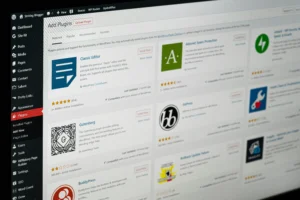
WordPress powers 43% of all websites on the internet in 2026. It’s the only platform worth using for a monetized blog.
Most hosting providers install WordPress in one click from your dashboard. After installation, you need three things:
A clean, fast theme — Astra or GeneratePress are the two best free options. Both load under 1.5 seconds and are optimized for SEO out of the box.
Essential plugins — Install Rank Math (SEO), WP Rocket or LiteSpeed Cache (speed), and Akismet (spam protection). These four plugins handle 90% of what a beginner needs.
Key pages — Create an About page, Contact page, and Privacy Policy before publishing your first post. Google looks for these as trust signals.
Step 4 — Create Your Content Strategy Before Writing a Single Post
This is the step most new bloggers skip — and it’s the reason most blogs fail within 6 months.
Before writing anything, answer these three questions:
Who is your exact reader? Not “people interested in finance” — “Pakistani men aged 22–35 who want to start investing with under Rs. 10,000.”
What are your 10 pillar topics? These are the core subjects your blog will cover repeatedly and deeply. For an online earning blog: freelancing, AI tools, blogging income, side hustles, passive income.
What is your keyword strategy? Use free tools — Google Search Console, Ubersuggest free tier, or AnswerThePublic — to find questions your audience is already searching. Write posts that answer those exact questions.
Consistency beats volume. Publishing 2 high-quality posts per week for 6 months outperforms publishing 5 average posts per week for 2 months. Choose quality and commit to a schedule you can actually maintain.
“Is Blogging Still Worth Starting in 2026?” — The Obvious Objection Answered
This is the question every new blogger asks — and it deserves a direct, honest answer.
Yes, competition is higher than it was in 2015. Yes, Google’s AI Overviews are reducing clicks to some informational articles. Yes, some niches are genuinely saturated.
But here’s what the data actually shows: blogs built around genuine expertise, first-hand experience, and clear monetization strategies are performing better than ever in 2026. Google’s Helpful Content system specifically rewards content written by people who have actually done the thing they’re writing about.
The bloggers struggling in 2026 are those who started blogs as content farms — producing generic AI-written articles on competitive topics with no real expertise behind them. That model is dead.
The Core Insight: Blogging Is Dead — Generic Blogging Is Dead
The distinction that matters in 2026 is not “should I start a blog” — it’s “do I have genuine knowledge or experience worth sharing with a specific audience?” If yes — blogging is one of the highest-ROI online businesses you can build on a $65 budget. If no — no platform, no strategy, and no AI tool will save you.
Authenticity and real expertise are now the only sustainable moat in blogging. That’s not a threat — it’s the best news possible for people who actually know something.
Industry Comparison — Blogging vs. Other Online Income Methods in 2026
How does blogging stack up against other ways to start a blog and make money online?
Blogging vs. YouTube: YouTube has a faster path to first income for people comfortable on camera. Blogging has lower startup costs, no equipment needed, and higher long-term passive income potential. The two work best together — blog content repurposed into YouTube videos doubles your reach from one piece of research. If you’re thinking about YouTube as a companion channel, the breakdown of best YouTube niches for AI content in 2026 shows exactly which topics are growing fastest right now.
Blogging vs. Freelancing: Freelancing pays faster — you can earn your first dollar within days. Blogging takes 6–12 months before meaningful income arrives. But blogging scales without trading time for money; freelancing doesn’t. The smartest move in 2026 is to freelance for immediate income while building a blog for long-term passive revenue simultaneously.
Blogging vs. Social Media: Social media builds audiences faster but you never own them. A platform algorithm change can wipe your reach overnight. A blog with an email list is an asset you own permanently. The most resilient online income in 2026 combines both: social media for traffic, blog plus email list for owned audience.
Who Is Better Positioned — New Bloggers or Established Ones?
Established bloggers with authority have a clear advantage in competitive niches. But new bloggers in 2026 have tools available that didn’t exist before — AI for faster content production, better free SEO tools, and micro-niche opportunities created by AI disruption in traditional industries.
New bloggers who pick specific, underserved niches and publish genuinely helpful content consistently are still ranking and earning within 6–12 months. The path is narrower than it was — but it absolutely exists.
What You Should Actually Do Now — Honest Advice
Here’s what I would tell a friend who wants to start a blog and make money in 2026, based on their exact situation:
If you’re starting from zero with no niche decided: Spend 3 days — not 3 weeks — on niche research. List 5 topics you genuinely know well. Cross-reference with Google search volume and monetization potential. Pick the one where both your knowledge and the money are deepest. Then commit and stop researching.
If you have a niche but haven’t launched yet: Stop planning and start publishing. Buy hosting today — $34.50 for your first year. Install WordPress. Write your first 3 posts. The biggest mistake new bloggers make is spending 2 months “preparing” before publishing a single word. Your blog improves by publishing, not by planning.
If you’ve started but aren’t seeing traffic after 3 months: You either have an SEO problem or a content quality problem — rarely both. Install Rank Math, run your existing posts through its SEO checker, and fix the top issues. Then look honestly at your content: would you bookmark it? Would you share it? If not — rewrite before publishing more.
If you’re undecided about whether blogging is right for you: Start with freelancing first. It builds writing skills, client communication skills, and industry knowledge — all of which directly translate into better blogging. Read the guide on top freelancing skills in 2026 that actually pay well and start earning while you decide whether blogging is your long-term path.
What Comes Next — Blogging Is Not a Dying Industry
The blogs that start today and follow the right strategy will be the authority sites of 2028 — and the 12–18 month outlook for serious bloggers is genuinely strong.
AI search tools like Perplexity and Google’s AI Overviews are changing where some traffic comes from — but they’re also creating new citation opportunities. Blogs that AI tools cite as sources are gaining massive credibility signals. Being cited by an AI answer is the new “ranking number one” in certain query types.
Email lists are becoming the most valuable asset a blogger can own. As zero-click searches increase and social media algorithms become less predictable, direct access to your reader’s inbox is worth more than any SEO ranking. Every blog launched in 2026 should start building an email list from post number one.
Video integration will become standard. By 2027, expect the highest-earning blogs to routinely pair written content with short video summaries — 60-90 second explainers embedded in posts. Readers who prefer video get their format; readers who prefer text get theirs. Both get served by the same piece of research.
The bloggers who start a blog and make money consistently in 2026 and beyond share one trait: they treat their blog as a long-term business, not a short-term hustle. Content compounds. Authority compounds. Email lists compound. Every post published today is still earning traffic and income 3 years from now — which is something no hourly freelance rate can match.