
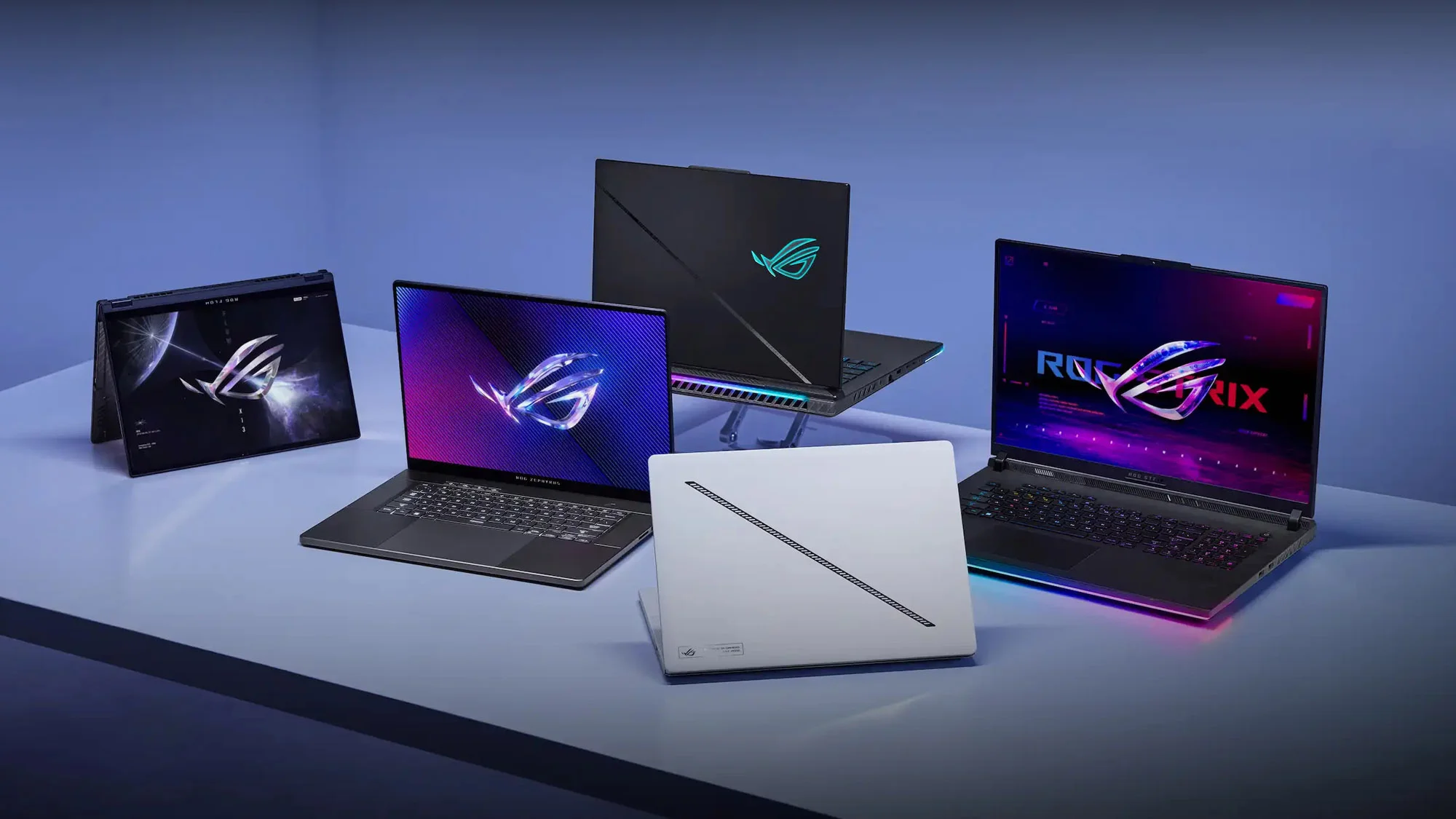
Here is a question I get asked more than almost any other tech question in 2026.
Someone is about to spend $500 to $1,000 on a laptop. They game occasionally — maybe a few hours on weekends, maybe more during breaks. They also use it for studying, working, browsing, streaming. And they cannot figure out whether the “gaming” label is worth paying for or whether it is just marketing designed to extract more money from people who like the idea of powerful hardware.
It is a genuinely difficult question — and most buying guides make it worse by either oversimplifying the comparison or assuming you already know what every specification means.
Here is the honest answer: gaming laptops and normal laptops are built around fundamentally different design philosophies. Understanding that distinction — not the spec sheet, the philosophy — is what actually helps you make the right decision for your specific situation. The data from 2026 makes the picture clearer than it has ever been.
Gaming Laptop vs Normal Laptop — The Design Philosophy Gap
The clearest way to understand the difference between a gaming laptop and a normal laptop is to understand what each one was optimised to do well.
A gaming laptop was built to run demanding software at high frame rates without throttling. Every decision in its design — the processor, the GPU, the cooling system, the display — flows from that single requirement. High-performance components generate heat. Heat throttles performance. So gaming laptops need aggressive cooling systems. Aggressive cooling systems need space and weight. Weight reduces portability. This is not a flaw — it is the logical consequence of prioritising performance above everything else.
A normal laptop was built to run everyday tasks efficiently for as long as possible on a single charge. Its design philosophy flows from portability, battery life, and thermal efficiency. Integrated graphics run cooler and use less power than dedicated GPUs — which is exactly what you want if you are carrying a laptop between lectures, through airports, and into coffee shops where outlets are scarce.
Neither philosophy is wrong. Both produce excellent products for the use cases they were designed for. The mistake is buying a product designed for one philosophy when your actual needs align with the other.
The Real Specs Comparison — What Actually Differs
Here is the honest hardware comparison between gaming and normal laptops in 2026, based on actual data from the market:
The processor difference is meaningful but smaller than it used to be. Gaming laptops typically use Intel Core i7 or i9, or AMD Ryzen 7 or 9 — processors built to handle demanding workloads and modern game engines. Normal laptops use Intel Core i3 or i5, or AMD Ryzen 3 or 5 — efficient and reliable for everyday tasks but not optimised for sustained high-performance workloads.
The graphics difference is the most significant. Gaming laptops include dedicated GPUs — NVIDIA RTX 4060 through RTX 4090 being the current standard — which handle complex graphics rendering, ray tracing, and the sustained GPU load that modern games require. Normal laptops rely on integrated graphics — Intel Iris Xe or AMD Radeon — which are fine for streaming, browsing, and light creative work but cannot handle the sustained graphics demand of modern gaming.
RAM ranges from 16GB to 64GB DDR5 in gaming laptops versus 8GB to 16GB DDR4 or DDR5 in normal laptops. Display refresh rates run 120Hz to 240Hz in gaming machines versus 60Hz to 90Hz in standard laptops. These numbers translate directly into how smooth games feel — a 144Hz display makes fast-paced games noticeably more fluid than a 60Hz panel, regardless of GPU capability.
Weight and battery life are where normal laptops reclaim their advantage. Gaming laptops weigh 1.5kg to over 3kg depending on the model. Normal laptops typically stay under 1.5kg. Battery life under gaming load on a gaming laptop averages under 5 hours. Normal laptops manage 6 to 12 hours for everyday tasks.
Are Gaming Laptops Good for Everyday Use?
Yes — and this is where many buyers get pleasantly surprised.
Modern gaming laptops handle everyday tasks significantly better than their reputation suggests. The same processor and RAM configuration that runs games smoothly also handles dozens of browser tabs, video calls, document editing, and multitasking without hesitation. High-refresh displays make even basic scrolling feel more fluid. The additional RAM means you rarely encounter the memory pressure that slows down budget normal laptops under heavy browser loads.
Where gaming laptops genuinely excel beyond gaming includes video and photo editing — creative workflows that benefit from dedicated GPU acceleration. Engineering and simulation software. Data science workloads. Any task that benefits from high processor performance and substantial RAM.
The honest limitations are equally real. Gaming laptops are heavier — carrying 2.5kg in a backpack all day is noticeably different from carrying 1.2kg. Battery life is the most significant practical limitation — a gaming laptop unplugged from a wall during a full day of classes or work will run out of charge before a normal laptop does. Fan noise is another consideration; under load, gaming laptop fans are audible in a way that normal laptop fans often are not.
The practical conclusion: if you have reliable access to power outlets and do not mind the weight, a gaming laptop works excellently as a primary machine for all tasks. If you need an all-day laptop for a mobile lifestyle, the weight and battery limitations are real costs.
Are Normal Laptops Good for Gaming?
It depends entirely on what you define as gaming — and being honest about this prevents a lot of disappointed purchases.
Normal laptops in 2026 handle certain gaming categories well. Indie games — titles that prioritise creative concepts over graphical fidelity — run smoothly on integrated graphics. Think Stardew Valley, Hollow Knight, Undertale, Celeste, and hundreds of similar titles. Classic remasters and retro-style games are specifically designed to run on modest hardware. Casual online games — browser games, card games, simple strategy titles — ask little from any hardware.
Where normal laptops struggle or fail is modern AAA games. Titles like Cyberpunk 2077, Elden Ring, Call of Duty, and recent open-world releases require dedicated GPU performance that integrated graphics cannot provide at playable frame rates. This is not a settings adjustment problem — it is a hardware ceiling. Lowering resolution and detail helps, but below certain settings thresholds the game becomes visually unpleasant rather than simply less impressive.
Cloud gaming changes this calculation meaningfully in 2026. Services like Xbox Game Pass Ultimate with cloud gaming and NVIDIA GeForce NOW stream demanding games from remote servers to your device — meaning the graphical processing happens elsewhere and only the display output arrives at your laptop. A normal laptop with a strong internet connection can access the latest AAA titles through cloud gaming without needing a dedicated GPU. For buyers whose primary concern is accessing modern games rather than running them locally, this is a genuine option. If you want to understand how your laptop fits into a broader setup for earning through content creation and gaming streams, our guide on how to make money with AI tools in 2026 covers the full range of laptop-based income strategies.
Can You Turn a Normal Laptop into a Gaming Laptop?
This is the question most comparison guides avoid answering honestly — and the answer requires a clear-eyed look at what is and is not upgradeable.
The components you can upgrade: RAM and storage. Adding RAM from 8GB to 16GB improves multitasking and slightly improves gaming performance in RAM-sensitive titles. Upgrading from HDD to SSD dramatically improves game loading times and general system responsiveness. Both upgrades are worth doing on a budget normal laptop regardless of gaming intent — and both cost $25 to $50 in parts.
The components you cannot upgrade: the CPU, GPU, and display. In most laptops, the CPU is soldered to the motherboard and cannot be replaced. The GPU — the component most responsible for gaming performance — is either integrated into the processor chip or soldered to the board in almost all consumer laptops. You cannot add a dedicated GPU to a laptop that shipped without one. The display’s refresh rate is fixed at manufacture — you cannot change a 60Hz panel to 144Hz.
The one partial exception is external GPUs. Laptops with Thunderbolt 3 or Thunderbolt 4 ports can connect to an eGPU enclosure containing a desktop-class graphics card. This provides genuine gaming performance improvements — but eGPU enclosures cost $200 to $400 before the GPU, the desktop GPU adds another $200 to $500, the setup loses portability entirely, and performance bottlenecks through the Thunderbolt connection mean you do not get full desktop GPU performance. For most buyers, the total cost approaches or exceeds a purpose-built gaming laptop.
The practical advice: upgrade the RAM and SSD if you own a normal laptop and want better gaming performance. Do not expect component upgrades to turn a $400 normal laptop into a machine that runs modern AAA games smoothly — the GPU ceiling prevents it.
The Price Reality — What You Actually Pay
Gaming laptops start at around $500 for entry-level models with dedicated GPUs, rising to $999 and above for mid-range configurations, and exceeding $5,000 for professional-grade setups. The $500 to $800 range in 2026 has become meaningfully more capable than previous years — dedicated RTX 4050 GPUs are now available under $500, which represents genuine gaming hardware at a price that was unavailable two years ago.
Normal laptops start around $250 for basic configurations and reach $800 to $1,200 for premium ultrabooks with strong processors, high-resolution displays, and long battery life. The value proposition is different — you are paying for portability, battery efficiency, and build quality rather than raw performance.
The honest comparison at equivalent price points: a $600 gaming laptop and a $600 normal laptop are optimised for entirely different outcomes. The gaming laptop gives you significantly more processing power and a dedicated GPU. The normal laptop gives you a lighter build, longer battery life, and often better display quality for non-gaming content. Neither is the better product in absolute terms — each is better for a different buyer. For buyers who want budget gaming performance specifically, our guide on the best gaming laptops under 500 dollars in 2026 covers the strongest options at that price point. And if you are choosing between a gaming laptop and a regular laptop for work and study alongside occasional gaming, our guide on the best budget laptops under 500 dollars in 2026 covers the non-gaming side of the same budget.
The Mistakes That Lead to the Wrong Choice
The first mistake is buying a gaming laptop for the aesthetic rather than the performance. RGB lighting, aggressive angles, and gaming branding appeal to a lot of buyers who then carry a 2.5kg laptop to school every day and plug it in constantly because the battery lasts three hours. If you are buying the look rather than the capability, a normal laptop with better portability will serve you better.
The second mistake is buying a normal laptop and expecting it to run modern games. Integrated graphics have improved — AMD’s Radeon 780M integrated graphics in the Ryzen 7000 series handle older games and less demanding titles noticeably better than previous generations. But the ceiling on integrated graphics for modern AAA gaming is real. If running Valorant, Fortnite, or Apex Legends at smooth frame rates is important to you, a dedicated GPU is not optional.
The third mistake is ignoring the display refresh rate. Buyers often compare processor and RAM specs carefully while overlooking the panel. A 60Hz display on a gaming laptop is a meaningful compromise for fast-paced games regardless of GPU capability — the hardware can render frames faster than the display can show them. If gaming performance is your reason for buying a gaming laptop, verify the refresh rate before purchasing.
The fourth mistake is underestimating the portability cost. A laptop that weighs 2.5kg and lasts 3 hours unplugged is not the same product as one that weighs 1.2kg and lasts 10 hours — even if the specs look similar on paper. For buyers who move their laptop frequently, the weight and battery difference is experienced every single day, not just during gaming sessions.
Who Should Buy a Gaming Laptop
Buy a gaming laptop if you regularly play games that require a dedicated GPU — modern AAA titles, competitive shooters, open-world games. Buy one if you also do video editing, 3D modelling, data science, or other GPU-accelerated work. Buy one if you have reliable access to power outlets and do not mind carrying additional weight. Buy one if you want one machine that handles everything — gaming, work, creative tasks — without compromise on performance.
The gaming laptop market reached $13.3 billion in 2024 and is projected to grow to $21.93 billion by 2033 — a 15.4% annual growth rate that reflects how many buyers are making exactly this choice.
Who Should Buy a Normal Laptop
Buy a normal laptop if your gaming is limited to indie games, casual titles, or cloud gaming. Buy one if portability and battery life matter more than raw performance — if you carry your laptop through a full day of classes or work and cannot always plug in. Buy one if your primary use cases are browsing, documents, streaming, and video calls. Buy one if your budget is tight and you want the best productivity machine for the price rather than the best gaming machine.
What Comes Next
The line between gaming and normal laptops is narrowing every year. AMD’s integrated graphics continue improving — the Radeon 890M in the latest Ryzen AI processors handles gaming workloads that would have required a dedicated GPU two generations ago. Qualcomm’s Snapdragon X Elite chips deliver strong everyday performance with surprisingly capable integrated graphics. The $500 gaming laptop with a dedicated RTX 4050 — which did not exist two years ago — is now a real product from multiple manufacturers.
In two years, the distinction between gaming and normal laptops at the $500 to $700 price point will be smaller than it is today. But in 2026, the choice still matters — and the right answer depends entirely on what you actually need the laptop to do every day.
Gaming or not, the best laptop is the one that handles your specific use case reliably for the next three to four years. Everything else is marketing.
Is a gaming laptop better than a normal laptop for everyday use?
It depends on your lifestyle. Gaming laptops handle everyday tasks excellently — multitasking, video editing, streaming, and productivity all run smoothly on gaming hardware. The trade-offs are real though: gaming laptops are heavier at 1.5kg to 3kg versus under 1.5kg for normal laptops, and battery life averages under 5 hours compared to 6 to 12 hours for normal laptops.
Can a normal laptop run games in 2026?
Yes — for certain types of games. Normal laptops handle indie games, casual titles, browser games, and classic remasters well on integrated graphics. Where they struggle is modern AAA games like Cyberpunk 2077, Elden Ring, and Call of Duty — these require dedicated GPU performance that integrated graphics cannot provide.
Is it worth buying a gaming laptop if you only game occasionally?
It depends on how occasionally. If you game a few hours per week and primarily use your laptop for study or work, the weight and battery trade-offs of a gaming laptop may not be worth it — especially if your games are casual or indie titles that run on integrated graphics.